
Service businesses in Napa spend real money on Google Ads for local business every month, and a large share of that budget produces clicks that never convert. The most common reason, is not the budget. It is a misalignment between the keywords, the ad, and the page the searcher lands on.
Five decisions separate a Google Ads account that books jobs from one that only generates clicks. This playbook covers each one. A budget tiers section at the end helps you calibrate spend to your growth stage.
Table of Contents
- How to Structure Google Ads for Your Napa Valley Service Business?
- Which Keywords Signal Local Buying Intent in Napa?
- Why Does A Google Ads Landing Page Matching Determine Whether Ads Convert?
- How Does Call Tracking Connect Ad Clicks to Real Phone Leads?
- How Does HubSpot Attribution Show What Your Ads Actually Return?
- What Budget Tiers Make Sense for Napa Service Businesses?
- Frequently Asked Questions
How to Structure Google Ads for Your Napa Valley Service Business
A well-structured account makes every other optimization easier. The standard approach for a local service business separates campaigns by intent type, not by budget.
Campaign Types For Local Service Businesses
Three campaigns cover most of what a Napa service business needs:
- Brand protection: Bids on your business name and common misspellings. Low cost, high conversion rate. Prevents competitors from capturing searchers who already know you.
- Nonbrand service campaigns: One campaign per core service line, each containing tightly themed ad groups. An HVAC company, for example, runs separate campaigns for AC repair, furnace installation, and indoor air quality, not a single campaign for “HVAC services.”
- Retargeting (remarketing): Serves ads to people who visited your site but did not convert. These audiences convert at significantly higher rates than cold traffic because intent is already established.
Ad Group Structure Within A Campaign
Each ad group should map to a single theme: one service, one location modifier, one stage of intent. A roofing company in Napa might structure a campaign like this:
- Ad Group 1: roof repair napa, napa roof repair, roof repair napa ca
- Ad Group 2: roof replacement napa, napa roof replacement cost
- Ad Group 3: emergency roof repair napa, same day roof repair napa
Keeping ad groups tight means ad copy can mirror the keyword exactly, which raises your Google Ads Quality Score. A higher Quality Score lowers your cost per click and improves ad position. According to WordStream’s 2025 Google Ads benchmarks analysis, the average cost per lead across all industries increased by 5.13% year over year. [1] Tight structure is one of the primary ways to stay below that average.
Which Keywords Signal Local Buying Intent in Napa?
Not all keywords are equal. Broad, informational keywords attract researchers. Local intent keywords attract buyers. The distinction determines lead quality.
High-Intent Keyword Patterns For Napa Service Businesses
Keywords that signal purchase readiness typically include one or more of the following signals:
- Location modifier: “napa,” “napa ca,” “napa valley,” or a specific neighborhood or zip code
- Service specificity: the exact service name rather than a general category (“tankless water heater installation” rather than “plumber”)
- Urgency or timing: “same day,” “emergency,” “near me,” “open now”
- Price or comparison intent: “cost of,” “price,” “estimate,” “quotes”
Google Ads Negative Keywords: The Underused Tool
Negative keywords prevent your ads from showing on irrelevant searches. A Napa painting contractor does not want to pay for clicks on “paint colors” or “painting techniques.” A legal services firm does not want clicks from people searching for “legal aid” or “pro bono.” Build a negative keyword list before the first campaign goes live and refine it weekly for the first 60 days.
Match Types In 2026
Broad match has expanded significantly in recent years. Google’s own recommendation is to use broad match combined with Smart Bidding, but for local service businesses with limited budgets, phrase match and exact match provide tighter control during the early weeks of a campaign. Shift toward broader match types only after conversion data is established.
Why Does A Google Ads Landing Page Matching, Determine Whether Ads Convert?
The most common reason a well-funded Google Ads campaign underperforms is sending traffic to a general homepage instead of a service-specific landing page. A searcher who clicks on “napa roof repair” and lands on a homepage that talks about all roofing services experiences a mismatch. The conversion rate drops. The bounce rate rises. Google’s Quality Score falls, which raises the cost per click.
What A Matching Landing Page Includes
A landing page that converts paid traffic for a local service business needs six elements:
- Headline that mirrors the ad copy and keyword (“Napa Roof Repair — Appointments Available This Week”)
- Service description in plain language: what you do, how it works, and what the outcome is
- Trust signals above the fold: reviews, years in business, license numbers, or relevant certifications
- A single, clear call to action: book an appointment, request an estimate, or call now
- Phone number in a tap-to-call format for mobile visitors
- A short form if a phone call is not the preferred conversion: name, service needed, preferred contact time
The page should do one thing. Remove navigation links that lead visitors away. Remove secondary offers that dilute the primary CTA. The goal is a booked appointment or a phone call, not a site tour.
WSI Next Gen Marketing Builds Conversion-First Landing Pages Designed Specifically For Paid Traffic Campaigns
How Does Call Tracking Connect Ad Clicks to Real Phone Leads?
For most Napa service businesses, the phone call is the primary conversion event. A plumber, an HVAC company, or a dental practice does not close jobs through a website form. They close them over the phone. This means call tracking is not optional. It is the measurement backbone of the entire campaign.
How Call Tracking Works In Google Ads
Google Ads auto-generates forwarding numbers that replace your real phone number when a visitor arrives from a paid click. When the call occurs, Google records it as a conversion event tied to the keyword, campaign, and ad that generated the visit. You see which keywords produce calls, not just clicks.
What To Measure Beyond Call Volume
Call volume alone is not enough. Configure your call tracking to capture:
- Call duration: set a minimum threshold (typically 60–90 seconds) to distinguish genuine inquiries from misdials
- Call time of day: identify which hours produce the highest lead quality and match your ad scheduling accordingly
- Caller location: confirm that calls originate from your service area, not outside your geographic target
- First-time vs. repeat callers: new callers represent acquisition; repeat callers represent retention or service follow-up
Connecting Call Tracking To Your CRM
Google Ads call data becomes significantly more useful when imported into a CRM. The next section covers this through HubSpot attribution.
How Does HubSpot Attribution Show What Your Ads Actually Return?
Most Google Ads accounts report on clicks and conversions. HubSpot attribution reports on revenue. The difference is the distance between “the ad generated a lead” and “the ad generated a $4,200 booked job.”
How HubSpot Google Ads Integration Works
When HubSpot and Google Ads are connected, HubSpot appends UTM parameters to every ad click and stores them with the contact record created when the visitor submits a form, books a call, or is manually entered after a tracked phone inquiry. The contact record shows:
- Which campaign the contact came from
- Which keyword triggered the ad
- Which page they converted on
- What lifecycle stage they are currently in (lead, qualified, proposal sent, closed)
- If and when they became a paying client
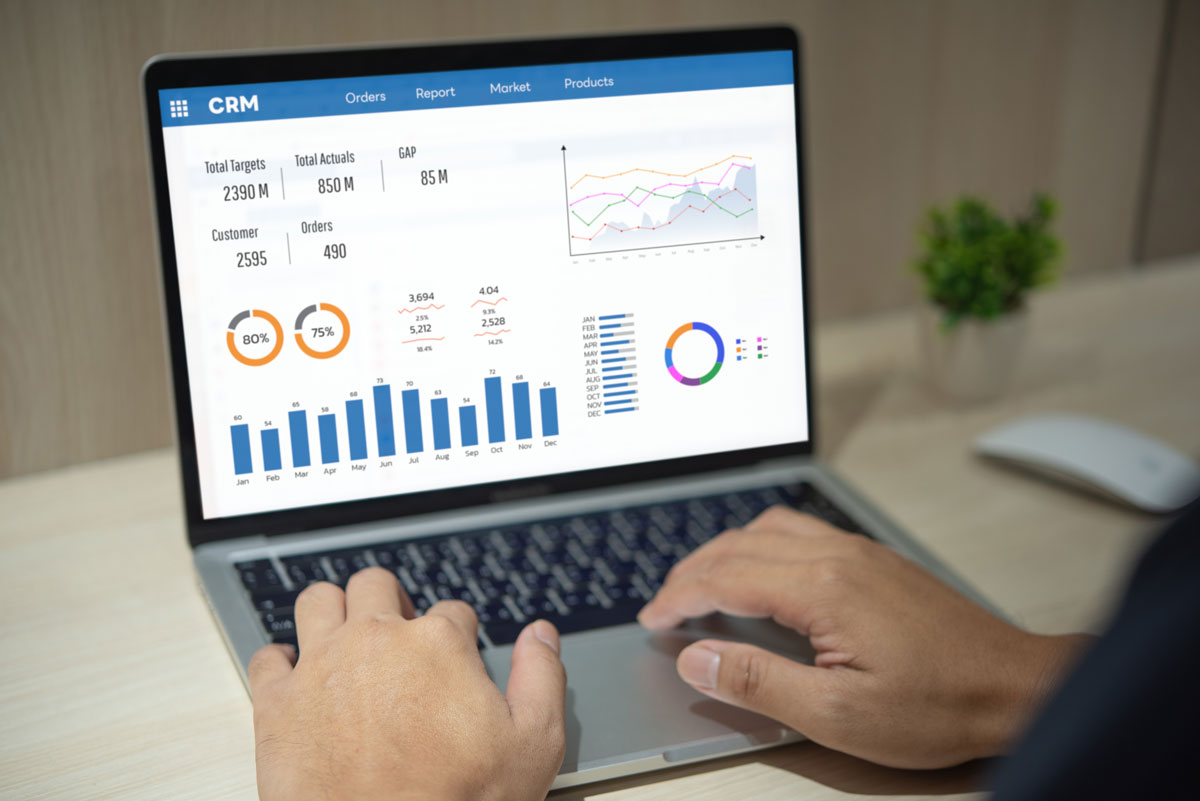
This chain connects ad spend to closed revenue. Instead of reporting that a campaign produced 14 leads last month, you can report that it produced 14 leads, 9 of which became qualified opportunities, and 4 of which closed at an average of $3,100, for a total return of $12,400 on $1,400 in ad spend.
Lifecycle Stage Tracking For Napa Service Businesses
Set HubSpot lifecycle stages to reflect your actual sales process. For a home services company, this typically looks like:
- Lead: form fill, call, or chat inquiry
- Marketing Qualified Lead (MQL): responded to follow-up, confirmed need
- Sales Qualified Lead (SQL): estimate sent or appointment scheduled
- Opportunity: proposal accepted, job confirmed
- Customer: job completed and invoiced
Each stage can be mapped to deal value. Over 90 days, this data shows which campaigns, keywords, and landing pages generate the highest-value clients, not just the highest number of leads.
Ready To Connect Your Google Ads To Measurable Business Outcomes?
What Budget Tiers Make Sense for Napa Service Businesses?
Budget decisions should follow business goals, not arbitrary round numbers. The three tiers below are calibrated for North Bay Area service businesses, from early-stage lead generation to full-funnel paid media coverage.
Lean: $1,000/mo
Campaigns: Brand protection plus one nonbrand service campaign.
What to expect: Captures high-intent searches for your primary service, protects brand terms, and retargets site visitors. Best suited for businesses testing paid search for the first time or running a single service line.
Core: $2,000/mo
Campaigns: Two nonbrand service campaigns, brand protection, and retargeting.
What to expect: Sustains lead flow across two service lines and adds retargeting to shorten sales cycles. The right level for businesses with established service demand and a CRM in place to track lead quality.
Growth: $3,000/mo and above
Campaigns: Full service coverage, landing page testing, and Performance Max.
What to expect: Scales lead volume, tests multiple ad angles, and expands into adjacent service keywords. Appropriate when conversion data from earlier tiers confirms a positive return and the business has sales capacity to handle higher lead volume.
What Determines Which Tier Is Right For You
The right tier depends on three inputs: your average job or contract value, your current lead volume from other sources, and your sales capacity. A roofing company with a $6,000 average job and two sales staff closing at 30% needs fewer leads per month than an HVAC company with a $400 average service call and a 60% close rate. Run the math on your own numbers before selecting a budget.
For a deeper look at our approach to Google Ads for local business, visit our digital advertising services page.
Napa Google Ads Structure at a Glance
The infographic below summarizes the campaign structure, keyword intent framework, and landing page requirements covered in this playbook. Embed it as a visual reference for your team or share it as a standalone asset.
| Tier | Monthly Spend | What to Expect |
|---|---|---|
| Lean | $1,000/mo | Brand protection + 1 service campaign. High-intent capture only. |
| Core | $2,000/mo | 2 service campaigns + brand + retargeting. Steady lead flow. |
| Growth | $3,000+/mo | Full service coverage + landing page testing + Performance Max. |

See what Google Ads management looks like for your service business.
Frequently Asked Questions About Google Ads for Local Businesses in Napa
1. How Much Should A Napa Service Business Spend On Google Ads Per Month?
2. How Long Does It Take For Google Ads To Produce Results For A Local Business?
3. What Is The Difference Between Local Service Ads vs Google Ads For Napa Businesses?
4. Can I Manage Google Ads Myself Or Do I Need An Agency?
Self-management is possible, but the learning curve is steep, and the cost of errors is immediate. Common mistakes include broad match keywords without negatives, campaigns sending traffic to homepages rather than dedicated landing pages, and no conversion tracking configured. An experienced agency pays for itself when campaign efficiency outpaces the management fee.
5. How Does HubSpot Improve Google Ads Performance For Local Service Businesses?
Get Started With Google Ads for Local Business
Getting Google Ads for local business right takes the right campaign structure, matching landing pages, and clean call tracking tied back to your CRM. If your account is not producing booked jobs the way it should, our team can review your setup and show you exactly where the budget is leaking. We work with Napa Valley service businesses every day to fix this, from brand protection campaigns through full HubSpot attribution.
Ready to see where your Google Ads for local business account stands? Schedule a consultation with our Napa advertising team.
References
- WordStream. (2025). Google Ads Benchmarks 2025. Retrieved from WordStream.com.
- WebFX. (2026). 50 Google Ads Statistics to Know in 2026. Retrieved from WebFX.com.
- Google. (2026). About conversion tracking in Google Ads. Retrieved from support.google.com.
- HubSpot. (2026). Connecting Google Ads to HubSpot. Retrieved from knowledge.hubspot.com.
- DemandSage. (2026). 81 Google Ads Statistics (2026). Retrieved from DemandSage.com.
WSI Next Gen Marketing
Napa, California
18 international design awards
50+ five-star client reviews
WSI global network in 80 countries
Serving Napa Valley since 2014
